
Books on awareness and the questions that shape a life.
Read slowly. Examine everything.
Short lessons, in your own time, at your own pace.
One question from your life. Selected passages from people who asked themselves the same question long ago. One lesson at a time.
In their own words, with sources.
Three voices, clearly separated: the author, history, our reading.
This is for you if …
- you feel there is more to your life than you are living
- you want to understand yourself, not be told who you are
- you have read the quick answers and want slower ones
- you like to think for yourself
Courses
Every course in the Academy. In every course, the orientation and the first lesson of each module are free.
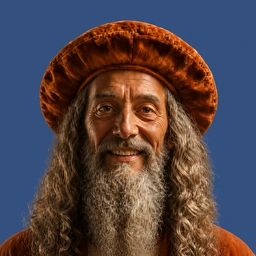
What shapes a life, and can I learn to see it?
The Kybalion
A course in the seven Hermetic principles
The Kybalion, first published in 1908, passes on a teaching that was long kept secret and handed down only by word of mouth. According to this teaching, everything that happens in life can be derived from seven principles. Understood this way, they are a key to a deeper understanding of every theme of self-knowledge and personal growth, and to the question of how a fulfilled life comes about.
45 lessons in 9 modules. 15 are open to everyone: the whole orientation and the first lesson of every module after it.
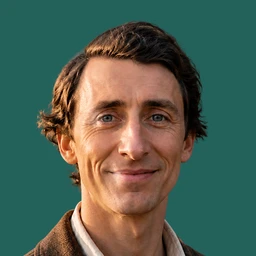
Am I really present in the life I am living?
Walden
A course in mindfulness with Henry David Thoreau
Walden, first published in 1854, tells of the two years Henry David Thoreau spent in a cabin he built himself by Walden Pond. He went to the woods to live deliberately and to see what life had to teach him. This course invites you to try his experiment where you are: to wake up, to live more simply, to pause, and to notice what changes.
54 lessons in 11 modules. 16 are open to everyone: the whole orientation and the first lesson of every module after it.
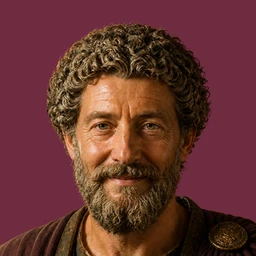
What is in my power?
Meditations
A course in serenity with Marcus Aurelius
A Roman emperor and philosopher writes notes to himself in the evening, for no one else. In his very first sentence he thanks his grandfather for “good morals and the government of my temper”. With kindness, patience and gratitude he reminds himself of what matters to him and of what he keeps forgetting. This course reads his notes slowly and asks your everyday life a single question: What is in my power?
55 lessons in 11 modules. 17 are open to everyone: the whole orientation and the first lesson of every module after it.
Am I living, or is my time just passing?
On the Shortness of Life
A course on time with Seneca
A Roman philosopher writes to a friend who has no time: Paulinus, probably in charge of Rome's grain supply. Life is not short, Seneca writes, we make it short. He shows where the time of busy people goes and what it means to live in leisure. This course reads his short work in full and asks one question of your everyday life with it: Am I living, or is my time just passing?
55 lessons in 11 modules. 17 are open to everyone: the whole orientation and the first lesson of every module after it.
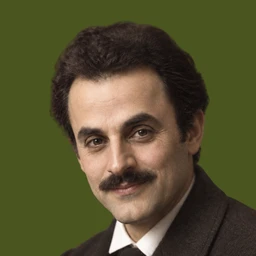
How do I live a whole life?
The Prophet
A course on love with Kahlil Gibran
A prophet waits twelve years for the ship that will take him home. When it comes, the people of the city ask him to speak to them: of love, of children, of work, of joy and sorrow, of death. Love is the book's first theme, and it stays until the end. This course reads all 26 sermons of Kahlil Gibran's book from 1923 and asks one question of your everyday life: How do I live a whole life?
55 lessons in 11 modules. 17 are open to everyone: the whole orientation and the first lesson of every module after it.
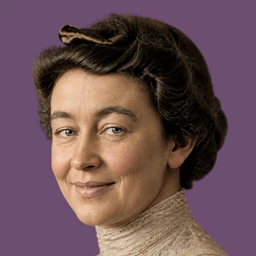
How well do I know the land around me?
The Land of Little Rain
A course on nature with Mary Austin
A woman lives for years in a valley below California's Sierra Nevada, on the edge of the desert, and notes what she sees: water trails, plants, animals, people. The maps call the land desert, writes Mary Austin, yet void of life it never is. To know it, she says, one must summer and winter with it. This course reads her 1903 book and asks with her what you see when you stay outside and look.
55 lessons in 11 modules. 17 are open to everyone: the whole orientation and the first lesson of every module after it.
Coming soon
Voices
Walden: voices on the book
We feel throughout the book the presence of a refined as well as a hardy mind.George Eliot, Westminster Review, 1856Voices on the books, not on our courses.
How you read here
No one can give you the answers to your life. These books give you better questions.
Read slowly. Each lesson is short and stands on its own. There are no live sessions and no deadlines. Every lesson you have read stays open to you.
Examine everything. You do not have to believe anything. We keep apart what a book says, what historians assume, and how we understand it. Then you test it against your own life.
Keep what you find. Private notes in every lesson. Your own definitions, gathered into a personal map at the end of a course.
Understanding is not the same as learning.
A book gives you the idea. Practice makes it yours.
You can read a book about simplicity and live exactly as before. Understanding happens in the head. Learning happens in your days: when you try an idea, notice what it changes, and put it into your own words. That is why every theme here has five steps, and why reading is the first of them, not the last.
- UnderstandYou read what the book says, slowly, with the book's own words.
- Go deeperYou look at the idea more closely, from another angle.
- Observe and experienceYou notice where the idea already shows up in your life.
- Experiment of the weekFor a week, you try it in your everyday life, in small and concrete ways.
- Reflect and integrateYou put into your own words what you found. It becomes part of your personal map.
In Walden's theme on simplicity, you read Thoreau's “Simplicity, simplicity, simplicity!” Then you look at one part of your own life and ask what it really costs you. For a week, you notice what you can let alone. At the end, you write down what simplicity means to you.
The free lessons let you understand. The full course lets you learn.
The first lesson of every theme is free: you read and understand the idea. Learning happens in the steps that follow, when you observe, experiment and reflect in your own life. These are in the full course.
Choose a courseWhat a lesson looks like
- What you will learn
- The text, often with the book's own words
- A sentence to take with you
- Often a moment of stillness
- Questions for reflection
- Space for your private notes
What this is not
This is not a belief system. We present each book as a teaching or a way of seeing, not as proven fact. It is not therapy and does not replace medical care. It is not coaching, and not a program for self-improvement. There is no subscription and no live session.
More courses will follow.
Which question would you like to read about next?
Your vote helps us choose. It is not a promise of a course.
The Dove
The Dove, our letter, comes at most once a month: news from the Academy, thoughts and quotes on the course themes, retreats and workshops, and occasional offers. You can sign up when you create your free account.
Create a free accountQuestions and answers
No. In every course, the orientation and the first lesson of each module are open to everyone, no account needed. With a free account you can also keep notes and track your progress.
About 3 to 5 minutes to read. Many lessons end with a short moment of stillness and questions for reflection.
No. There are no deadlines and no live sessions. You read in your own time.
Every lesson of the course, the weekly experiments, reflection questions, private notes in every lesson, and your own map at the end.
One payment per course. No subscription.
Your course opens right after you buy it. That's why we ask you, before you pay, to confirm that access should begin at once and that your right of withdrawal ends when it does. After that, there is no statutory right of withdrawal. If you have a question about a payment, write to us at hello@alchemyoflife.academy. We answer personally.
With no time limit, for as long as the Academy runs. Read at your own pace and come back whenever you like. Should we ever close the Academy, we will tell you by email well in advance.
Payment runs through Link, Stripe's payment service. Link is the seller (merchant of record) and sends you the receipt and invoice. The course itself is provided by Ronny Brehmer, Alchemy of Life Academy, Odiáxere, Portugal.
Your notes are private. Only you can see them, not other participants and not our course administration. If you delete your account, we delete your progress and notes too. More in our privacy policy.
No. We read books slowly and test them against our own lives. The courses do not replace medical or psychological care.
No. We keep apart what a book says, what historians assume, and how we understand it. You decide what you keep.